
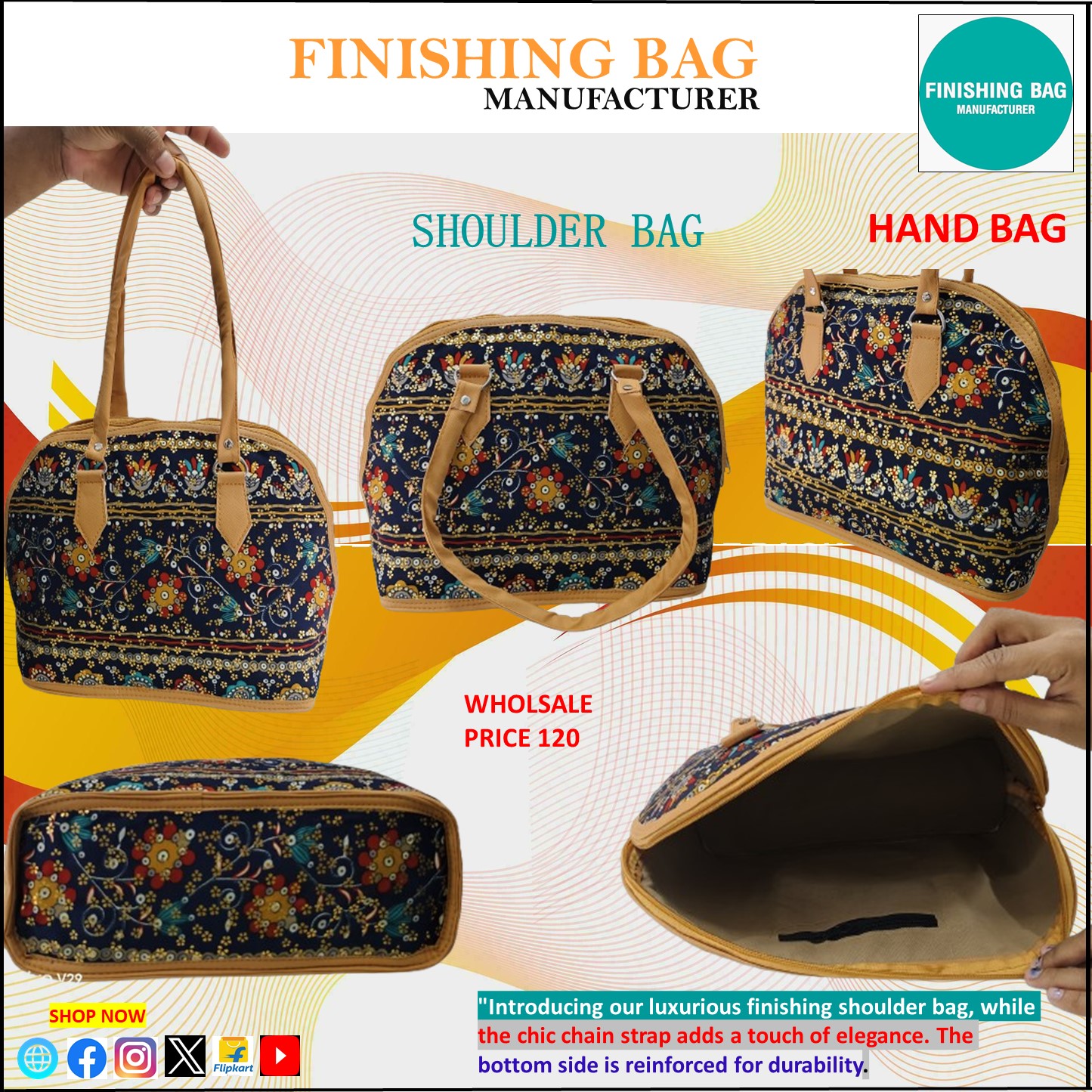
A finishing shoulder bag or women's handbag refers to the final stages of production in creating a stylish and functional bag that typically includes various finishing touches to enhance its quality, durability, and appearance. The finishing process involves the final steps in manufacturing, where the bag undergoes quality control and additional detailing to ensure the product meets standards. a full breakdown of the key aspects of a women's shoulder bag or handbag, with a focus on its finishing touches: 1. Material and Fabrication Outer Material: Common materials for women’s handbags include leather (genuine or faux), canvas, nylon, polyester, and exotic skins like crocodile, python, or ostrich. High-end brands might use premium leather types like calfskin, or patent leather. Lining: The inside of the bag is often lined with fabric, which could be cotton, polyester, or microfiber. Luxury bags may feature silk or suede linings for added elegance. 2. Bag Design Shape & Structure: Shoulder bags can have a variety of shapes such as: Tote: Rectangular or square, spacious and often unstructured. Satchel: Structured, often with handles and a detachable shoulder strap. Hobo: Soft, slouchy, crescent-shaped with a relaxed feel. Crossbody: Smaller, with a long adjustable strap for wearing across the body. Size: Ranges from large (for everyday use or travel) to small (for evening or formal occasions). Compartments: Well-designed handbags feature multiple pockets inside, like zippered sections, slip pockets, and card slots, for organization. 3. Finishing Details Stitching: Strong, uniform stitching enhances durability and aesthetic appeal. Common types include single needle or double-needle stitching. The stitching color often contrasts or complements the bag's main color. Edging: Leather bags may have edges that are finished with a burnishing process to smooth and seal them, preventing fraying. This can include hand-painted edges or machine-finishing. Hardware: The metal components of a handbag, such as: Zippers: High-quality, smooth-running zippers (YKK is a common brand). Buckles & Clasps: Often brass, gold-plated, or silver-plated. Handles & Straps: Leather, chain, or fabric straps, sometimes with decorative studs or rivets. Logo or Branding: Embossed or engraved metal plates, logos, or tags are added for branding. Closure: Magnetic snaps, zippers, drawstrings, or buckle closures to secure the contents inside. 4. Final Touches Color and Finish: The final finishing touches involve ensuring that the bag's color is consistent, the leather or fabric has been treated for wear resistance, and the surface is free of imperfections. Polishing and Buffing: Leather bags may be polished to add shine, and fabric bags may be cleaned to remove any dust or stains. Protective Coating: For durability, some bags are coated with a protective layer to resist water, stains, or scratches. This is common in luxury bags or bags made for outdoor use. 5. Quality Control Inspection: Before leaving the factory, each bag is inspected for defects, such as loose threads, uneven stitching, or poor color consistency. Durability Testing: The bag’s straps and handles may be tested for strength, while the hardware is checked for smooth function. Packaging: Once approved, the bag is carefully packaged in dust bags, boxes, or protective plastic to preserve its shape and prevent damage during shipping. 6. Trends in Women’s Shoulder Bags/Handbags Mini Bags: A trend for smaller bags that only carry essentials like a phone, lipstick, and cards. Sustainable Materials: Eco-friendly bags made from recycled or plant-based materials are increasingly popular. Vintage and Retro: Bags with designs that evoke past decades, like the 70s or 90s, are in fashion. Functionality & Versatility: Bags designed to transition between day and night or work and social events, with adjustable straps and modular designs. Bold Colors and Patterns: Bright colors, geometric patterns, or artistic prints have gained popularity, especially in casual or street-style bags. 7. Branding and Luxury High-End Finishing: For luxury brands like Chanel, Louis Vuitton, or Gucci, bags undergo extra steps in finishing, such as: Handcrafting in specialized ateliers. Use of premium hardware (e.g., gold-plated or custom-designed clasps). Signature elements, such as the iconic "double C" for Chanel or the "GG" pattern for Gucci, applied with precision. #Fashion #Style#Fashionista#FashionAddict #OutfitOfTheDay#StyleInspo#FashionGoals#InStyle#Chic #Handbag#HandbagLovers#BagLovers#Purse#DesignerBag#LuxuryBags#BagAddict#BagOfTheDay#HandbagCollection #ToteBag#ShoulderBag#ShoulderBags#CrossbodyBag #BagGoals#ShoulderBagStyle#EverydayBag #CasualBag#TravelBag#WorkBag#ChicBag


This is your website preview.
Currently it only shows your basic business info. Start adding relevant business details such as description, images and products or services to gain your customers attention by using Boost 360 android app / iOS App / web portal.
A finishing shoulder bag or women's handbag refers...
2024-12-27T07:39:47
A finishing shoulder bag or women's handbag refers to the final stages of production in creating a stylish and functional bag that typically includes various finishing touches to enhance its quality, durability, and appearance. The finishing process involves the final steps in manufacturing, where the bag undergoes quality control and additional detailing to ensure the product meets standards. a full breakdown of the key aspects of a women's shoulder bag or handbag, with a focus on its finishing touches: 1. Material and Fabrication Outer Material: Common materials for women’s handbags include leather (genuine or faux), canvas, nylon, polyester, and exotic skins like crocodile, python, or ostrich. High-end brands might use premium leather types like calfskin, or patent leather. Lining: The inside of the bag is often lined with fabric, which could be cotton, polyester, or microfiber. Luxury bags may feature silk or suede linings for added elegance. 2. Bag Design Shape & Structure: Shoulder bags can have a variety of shapes such as: Tote: Rectangular or square, spacious and often unstructured. Satchel: Structured, often with handles and a detachable shoulder strap. Hobo: Soft, slouchy, crescent-shaped with a relaxed feel. Crossbody: Smaller, with a long adjustable strap for wearing across the body. Size: Ranges from large (for everyday use or travel) to small (for evening or formal occasions). Compartments: Well-designed handbags feature multiple pockets inside, like zippered sections, slip pockets, and card slots, for organization. 3. Finishing Details Stitching: Strong, uniform stitching enhances durability and aesthetic appeal. Common types include single needle or double-needle stitching. The stitching color often contrasts or complements the bag's main color. Edging: Leather bags may have edges that are finished with a burnishing process to smooth and seal them, preventing fraying. This can include hand-painted edges or machine-finishing. Hardware: The metal components of a handbag, such as: Zippers: High-quality, smooth-running zippers (YKK is a common brand). Buckles & Clasps: Often brass, gold-plated, or silver-plated. Handles & Straps: Leather, chain, or fabric straps, sometimes with decorative studs or rivets. Logo or Branding: Embossed or engraved metal plates, logos, or tags are added for branding. Closure: Magnetic snaps, zippers, drawstrings, or buckle closures to secure the contents inside. 4. Final Touches Color and Finish: The final finishing touches involve ensuring that the bag's color is consistent, the leather or fabric has been treated for wear resistance, and the surface is free of imperfections. Polishing and Buffing: Leather bags may be polished to add shine, and fabric bags may be cleaned to remove any dust or stains. Protective Coating: For durability, some bags are coated with a protective layer to resist water, stains, or scratches. This is common in luxury bags or bags made for outdoor use. 5. Quality Control Inspection: Before leaving the factory, each bag is inspected for defects, such as loose threads, uneven stitching, or poor color consistency. Durability Testing: The bag’s straps and handles may be tested for strength, while the hardware is checked for smooth function. Packaging: Once approved, the bag is carefully packaged in dust bags, boxes, or protective plastic to preserve its shape and prevent damage during shipping. 6. Trends in Women’s Shoulder Bags/Handbags Mini Bags: A trend for smaller bags that only carry essentials like a phone, lipstick, and cards. Sustainable Materials: Eco-friendly bags made from recycled or plant-based materials are increasingly popular. Vintage and Retro: Bags with designs that evoke past decades, like the 70s or 90s, are in fashion. Functionality & Versatility: Bags designed to transition between day and night or work and social events, with adjustable straps and modular designs. Bold Colors and Patterns: Bright colors, geometric patterns, or artistic prints have gained popularity, especially in casual or street-style bags. 7. Branding and Luxury High-End Finishing: For luxury brands like Chanel, Louis Vuitton, or Gucci, bags undergo extra steps in finishing, such as: Handcrafting in specialized ateliers. Use of premium hardware (e.g., gold-plated or custom-designed clasps). Signature elements, such as the iconic "double C" for Chanel or the "GG" pattern for Gucci, applied with precision. #Fashion #Style#Fashionista#FashionAddict #OutfitOfTheDay#StyleInspo#FashionGoals#InStyle#Chic #Handbag#HandbagLovers#BagLovers#Purse#DesignerBag#LuxuryBags#BagAddict#BagOfTheDay#HandbagCollection #ToteBag#ShoulderBag#ShoulderBags#CrossbodyBag #BagGoals#ShoulderBagStyle#EverydayBag #CasualBag#TravelBag#WorkBag#ChicBag
2024-12-27T07:39:47


Keywords
- fabric straps
- brass goldplated
- handpainted edges
- quality durability
- machinefinishing hardware
- fabric bags
- functional bag
- gucci applied
- gg pattern
- iconic double
- specialized ateliers
- gained popularity
- artistic prints
- social events
- plantbased materials
- phone lipstick
- carry essentials
- shipping 6 trends
- prevent damage
- carefully packaged
- add shine
- imperfections polishing
- wear resistance
- buckle closures
- branding embossed
- rivets logo
- decorative studs
- metal components
- preventing fraying
- stitching color
- doubleneedle stitching
- single needle
- card slots
- square spacious
- tote rectangular
- suede linings
- feature silk
- cotton polyester
- crocodile python
- exotic skins
- key aspects
- full breakdown
- additional detailing
- final steps
- typically includes
- final stages
- premium hardware
- retro bags
- smaller bags
- bags straps
- bags made
- bags color
- protective plastic
- protective layer
- leather genuine
- finishing touches
- adjustable straps
- burnishing process
- womens handbags
- luxury bags
- luxury brands
- dust bags boxes
- finishing shoulder bag
- womens handbag refers
- womens shoulder bag
- buffing leather bags
- microfiber luxury bags
- luxury highend finishing
- premium leather types
- finishing process involves
- chanel louis vuitton
- smooth function packaging
- stains protective coating
- patent leather lining
- long adjustable strap
- ostrich highend brands
- evoke past decades
- increasingly popular vintage
- resist water stains
- body size ranges
- unstructured satchel structured
- product meets standards
Submit Your Enquiry